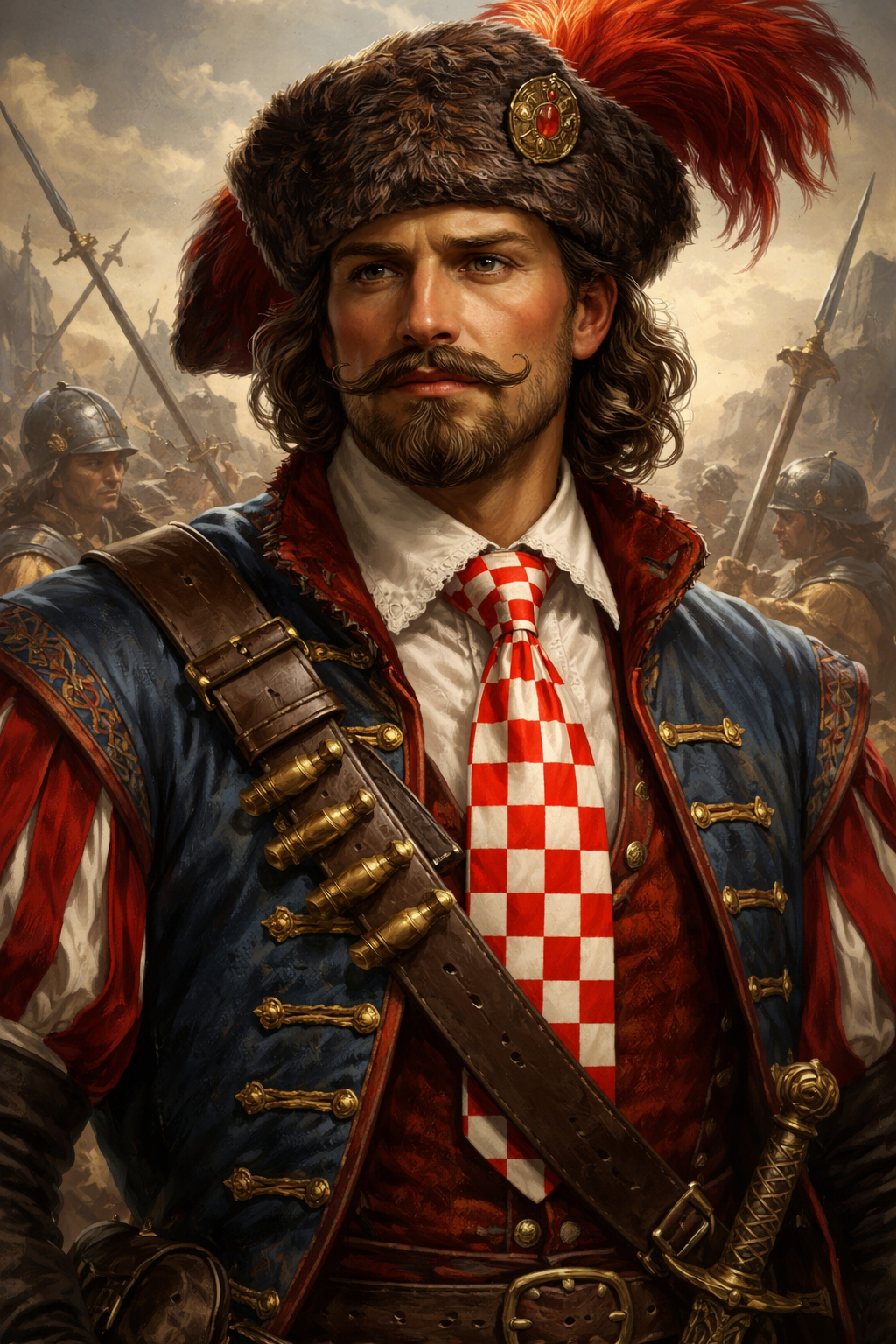
The history of ties is, quite literally, a story about humans deciding to decorate their necks for no practical reason—and somehow making it fashionable. It all started back in the 17th century when Croatian soldiers showed up in France wearing knotted cloths around their necks. The French thought, “Très chic!” and promptly adopted the look, calling it “cravate.” Just like that, a piece of battlefield practicality became a symbol of style. Leave it to humans to turn military gear into something you’d wear to a job interview.
As time went on, ties evolved from simple cloths into elaborate status symbols. In the 18th and 19th centuries, tying a cravat could take more effort than writing a résumé today. Entire guides were published just to teach men how to knot them properly—because nothing says “important gentleman” like spending 20 minutes perfecting a piece of fabric no one is supposed to notice too much. Eventually, things simplified into the modern necktie, which kept the look but reduced the daily struggle (slightly).
Today, the tie sits in a strange place: part tradition, part personality test. Some wear it to signal professionalism, others to show off flamingos, pizzas, or questionable life choices. From royal courts to office cubicles to your uncle’s wild holiday outfit, the tie has survived centuries of changing fashion. Not bad for something whose main job is to just hang there and make you look like you tried.